The winner of the Gutenberg Teaching Award 2025, Terence Blanchard, visits the JGU the 16th and 17th of July 2026. .
We look forward to your participation in four unusual events that are open to students and teaching staff from all disciplines.
16th of July 2026
Greetings
Prof. Dr. Stephan Jolie, Vice President for Learning and Teaching at JGU
Laudatio
Prof. Dr. Andrej Gill, Director of the Gutenberg Teaching Council
Entry in the JGU Golden Book
Presentation of the award
Statement by Mr. Blanchard on the importance of Teaching and Mentorship
Terence Blanchard with the Gutenberg Jazz Collective, conducted by Prof. Sebastian Sternal
Līva Dumpe (vocals, Latvia)
Coleman Rose (saxophone, USA)
Leandro Hernandez-Waber (piano, Germany, JGU)
Kertu Aer (bass, Estonia)
Kabelo Mokhatla (drums, South Africa)
Matthias Nick (guitar, Germany, JGU)
You may observe Blanchard’s inspiring teaching methods (“Masterclass“). You can also take part in a casual conversation with Terence Blanchard about social justice, American culture and the power of art (“A conversation with Terence Blanchard”) or discuss topics such as film scores and civil rights in the U.S. after a movie screening (“Filmscreening and Q&A”).
No registration is required to attend the film screening with Q&A, the masterclass and “A conversation with Terence Blanchard”.
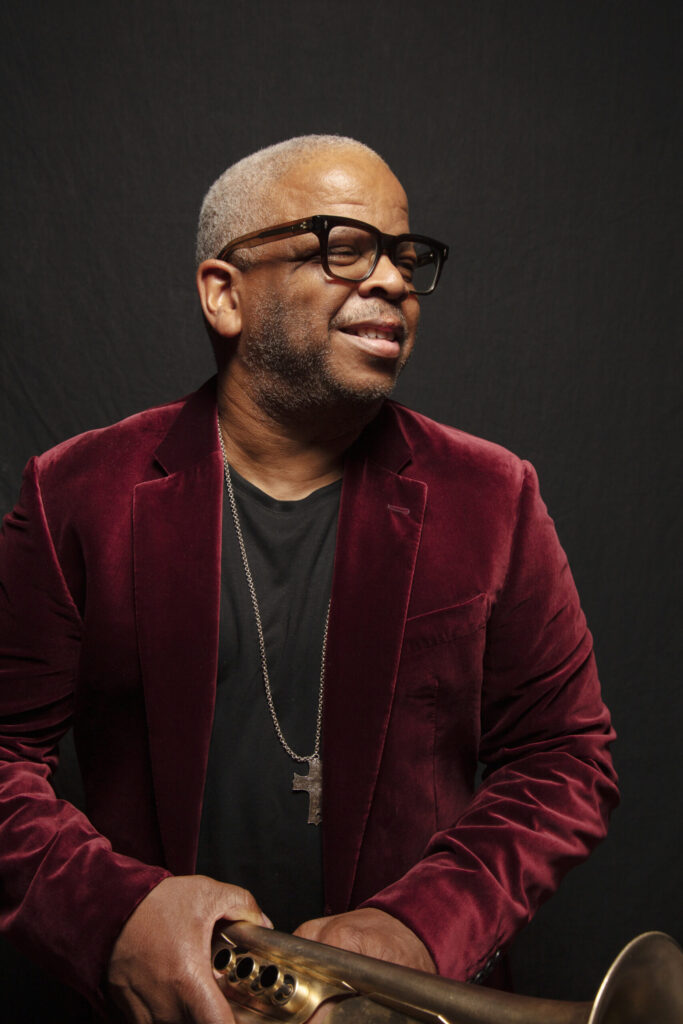
Terence Blanchard receives the Gutenberg Teaching Award from JGU Mainz for his extraordinary work as a musician, composer and, in particular, as a dedicated teacher and mentor. As a celebrated jazz trumpeter, opera and film composer, he has released over 20 albums and composed the music for more than 60 films. He has won several Grammy Awards and has twice been nominated for an Oscar for Best Film Score.
At the center of his award, however, is Blanchard’s visionary role as an educator. He is considered one of the most influential jazz teachers of our time and has shaped institutions such as the Herbie Hancock Institute of Jazz (formerly the Thelonious Monk Institute). Blanchard has taught at renowned universities such as the Berklee College of Music in Boston and the University of Miami and in 2023 took over as artistic director of SFJAZZ in San Francisco, an organization that reaches over 250,000 people a year with a wide range of educational programs and concerts. In his teaching, Blanchard emphasizes composition as a starting point for creative development. He promotes an experimental, equal learning environment in which every idea counts – regardless of origin or gender. For him, jazz education is a “laboratory” that should enable young people not only to play, but also to develop their own musical visions. He also embodies this attitude as a bandleader by constantly promoting young talent.
Blanchard’s commitment to social justice also flows into his work as a teacher. He sees music as a means of enlightenment, dialog and encouragement. His work is an appeal to responsibility and humanity – and thus an outstanding example of the combination of artistic excellence and educational mission.

